
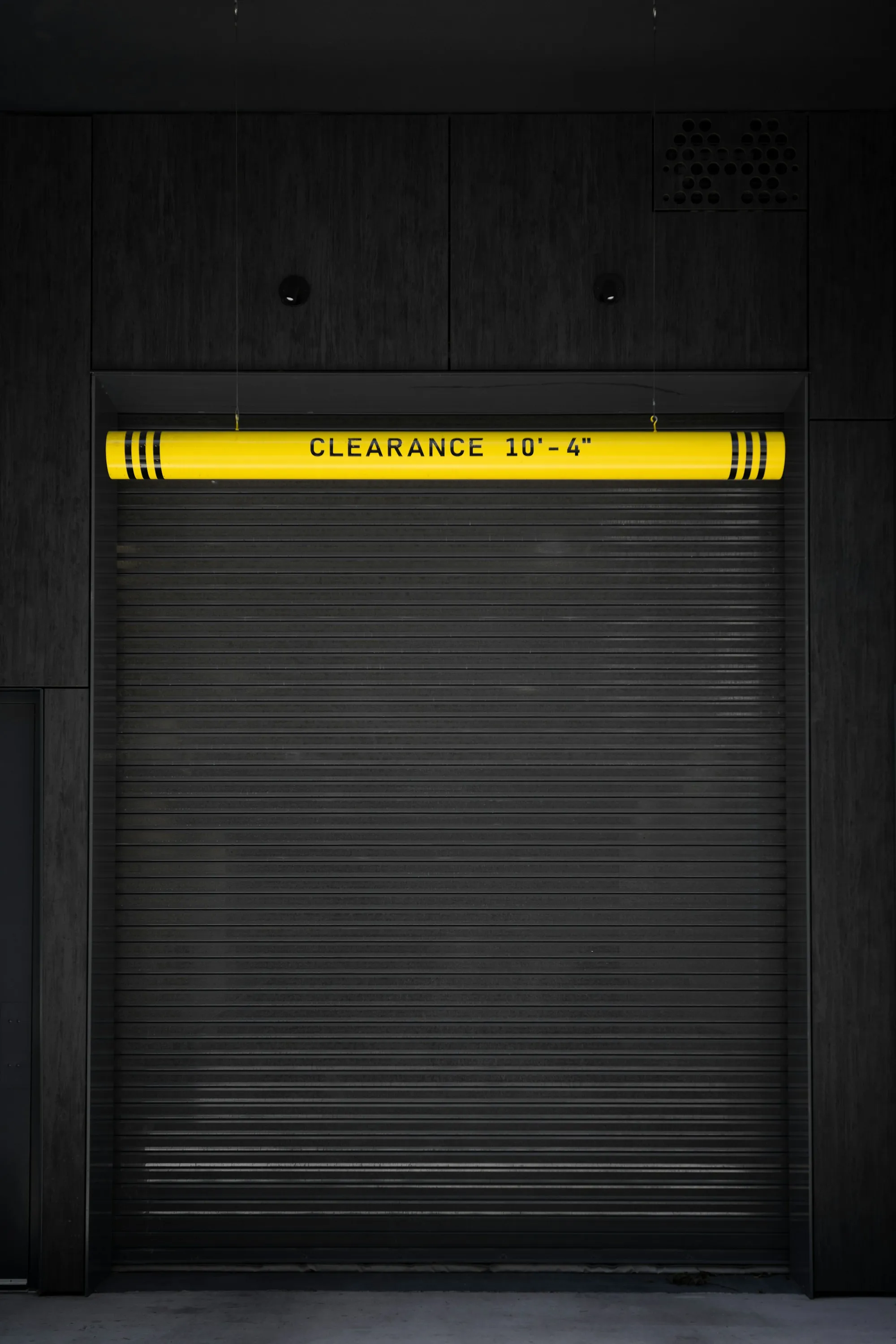
Doors that keep work moving
Arcadia Garage Door Repair for Shops, Farms and Storefronts
Sectional, rolling steel and roll-up doors repaired by people who know a stuck door stops the whole operation, with the visit planned around when you need it open.
Talk through your door with us at (941) 491-0636The Doors That Run a Working Building
Type 01
Commercial sectional doors
Insulated or plain steel panels on vertical track, usually fitted with a motor operator. Heavy daily use wears springs, cables and hinges long before the panels give out.
Type 02
Rolling steel doors
A curtain of interlocking slats coils onto a barrel above the opening. Guides, bottom bar and the counterbalance inside the barrel decide whether it runs smoothly.
Type 03
Roll-up sheet doors
The corrugated steel doors seen on storage units, mini warehouses and outbuildings. A coiled spring and a light curtain make them simple, and easy to knock out of true.
Type 04
Barn, shed and workshop doors
Wide openings for tractors, trailers and hay wagons, often on buildings without much headroom. These doors take dust, bumps and uneven slabs without complaint until one day they do not.
The service list
Pick the Repair, Read How We Handle It
Every repair has its own page describing the early signs, the work plan and the questions owners ask. Springs and cables lead the list, with operators, seals and new doors behind them.
Garage Door Repair
Sectional, rolling and roll-up doors that bind, drag or stop mid-travel are traced to the worn part and put back to work.
Garage Door Spring Repair
Torsion and extension springs replaced as matched sets, with cycle-rated options for doors that open dozens of times a day.
Garage Door Cable Repair
Cables that fray, stretch or snap are swapped as a matched pair, and drums and brackets inspected, so the door climbs level.
Off-Track Garage Door Repair
Doors knocked out of the track are secured, straightened and rebuilt where needed, with damaged rollers and sections replaced.
Garage Door Roller & Hinge Replacement
Worn wheels and cracked hinges replaced with parts that suit the door's weight and its daily number of trips.
Garage Door Panel Repair
Dented, cracked or bowed sections repaired or replaced, with struts added to wide doors that sag in the middle.
Garage Door Opener Repair
Commercial operators and home openers that hum, stall, drift or reverse are repaired, with limits, force and safety edges reset.
Garage Door Opener Installation
Duty-rated operators, jackshaft and wall-mount units installed on commercial, farm and home doors, set up with safe limits and reversing.
Garage Door Sensor Repair
Knocked, dusty or dead beam units and sensing edges restored so a closing door detects what is in its way.
Garage Door Weather Seal Replacement
Bottom seals, jamb seals and top seals replaced so doors keep out dust, water, leaves and pests.
Garage Door Tune-Up & Maintenance
Springs, cables, rollers and operator checked and adjusted on a schedule that suits how often the door actually runs.
New Garage Door Installation
New sectional, rolling steel and roll-up doors measured, ordered and installed for shops, barns, storage and homes, with permits handled.
Hurricane-Rated Garage Doors
Wind-rated sectional and rolling steel doors chosen by design pressure and installed as approved assemblies, with permits explained.
Commercial Garage Door Repair
Sectional, rolling steel and roll-up doors on shops, warehouses and farm buildings repaired, with high-cycle parts and visits planned around your hours.

Steel curtains
How Rolling Steel and Roll-Up Doors Work, and Where They Quit
A rolling door has no panels and no horizontal track. Its curtain, whether interlocking steel slats or a single corrugated sheet, winds around a pipe called the barrel. A spring inside the barrel offsets the curtain's weight, and the curtain travels in a steel guide on each side. Power comes from a chain hoist, a motor operator or, on light sheet doors, a hand pull.
Failures follow the parts. The spring loses tension and the curtain feels heavy. A bump from a forklift bends a guide or a slat, and the curtain starts to climb out of its channel. Sheet curtains can wind unevenly and rub the barrel end. Operators drift out of limit, and a door that no longer stops where it should will eventually jam.
Curtain leaving the guides
Impact bends a guide or kinks a slat, and the edge works loose with each cycle. Left alone, the curtain tears or jams.
Counterbalance gone soft
The barrel spring weakens with age and use. The door becomes hard to raise by hand, and a motor operator strains against the extra weight.
Bottom bar and edge damage
A bent bottom bar will not seat, and a worn sensing edge may stop detecting an obstruction. Both are quick to fix and costly to ignore.
Keeping downtime short
Repairs Planned Around Your Opening Hours
A door that will not close is a security problem; one that will not open is a lost morning. Neither is fixed well by arriving whenever it suits a route. When you phone, we ask when the door matters most: first delivery, a harvest run, a shipping cutoff, closing time. The visit is planned around that.
We also try to settle what is needed before we arrive. Door type, opening size, spring condition and operator model, described on the phone, let us bring suitable parts and finish in one pass more often. If a door has to be secured for the night or left half-repaired, we say so first.
How the Work Gets Done
- 01
Springs sized to the duty
We ask how often the door cycles each day, then choose a spring set that will last at that rate rather than the standard one.
- 02
Repairs scheduled around you
The work is fitted to your delivery runs, opening hours or harvest days, so the building is neither left open nor shut longer than needed.
- 03
Safety devices set properly
Operator limits, force settings, beam units and sensing edges are adjusted and tested at the end of each job, not assumed to be fine.
- 04
A straight account of the door
You hear what failed, what is close to failing and what can wait, in that order, so you can spend on the part that matters.
Four Steps From Call to Finished Door
The steps stay put whether the job is a storage-unit roll-up or a shop door fourteen feet wide. Only the time spent on each changes.
- 1
Describe the job
Give us the door type and size, its rough daily cycle count, and the symptoms it shows. We ask when the building needs it working.
- 2
Inspect and report
We examine springs or barrel, cables, guides, hardware and operator, then explain what failed and what the realistic options are.
- 3
Repair in the window
Work is done in the time slot we agreed, with the door secured at every stage and the area kept clear for your people.
- 4
Test under load
The door is cycled repeatedly, balance and travel limits are checked, and the safety devices are tested before it goes back to work.
Questions Owners Ask First
- How much life is in a garage door spring?
- Most factory springs are made to last somewhere near ten thousand trips up and down, where a trip means one complete rise and descent of the door. At two trips a day that is over a decade; on a shop door at forty a day it is closer to eight months. High-cycle springs exist for busy doors.
- Should I repair my door or replace it?
- Fixing it is sensible when the panels or curtain are sound and the trouble is in the hardware. Replacement is worth discussing when several sections are bent, the curtain is torn or parts are no longer made. We tell you which applies after looking.
- Why does a wind rating matter on a garage door, and will my building require it?
- Wind-rated means the entire door system, not a single part, was put through testing at a named pressure, and it comes with a Florida product approval on file. Whether your building needs one turns on how it is used and which code applied when the permit was pulled, so the building department decides.
- Do you work on every make of opener and door?
- We work on sectional, rolling steel and roll-up sheet doors and on most common operator types. Give us the make and model when you phone. If an older unit needs a part that is hard to find, we explain the substitutes first.
- How frequently does a garage door need servicing?
- Frequency follows use more than the calendar. A residential door benefits from a yearly look; a door that cycles all day deserves a check every few months. We can suggest an interval once we know how often yours runs.
- The motor runs, yet the door refuses to rise. Why?
- Pull the release handle and try raising the door yourself. If it feels very heavy, most likely a spring or cable has broken, and the opener cannot lift that load. If it rises easily, the trolley, gear or drive linkage has let go.
Where We Work Around DeSoto County
Most calls come from Arcadia and the farming and ranching communities around it. If your address is not named below, describe the building and we will say plainly whether it is within reach.
Arcadia
Storefronts, shops and yard buildings in town, with doors that open and close all day.
Nocatee
Packing-shed and equipment doors on citrus and ranch property to the west.
Fort Ogden
Barn, workshop and storage doors in the open country south along the river.
Lake Suzy
Residential doors and detached garages, plus small commercial bays nearby.
Brownville
Farm outbuildings and shop doors that sit unattended for long stretches.
Hull
Ranch equipment sheds and wide overhead doors on large, dusty parcels.
Get the Building Working Again
Whether it is a roll-up that will not wind or a shop door hanging crooked, a short conversation sets the next step.
Reach the shop at (941) 491-0636